Why Reading to Your Child Is So Important (And How It Helps Them Learn)
Discover why reading aloud is one of the strongest foundations for language, literacy, connection and a lifelong love of learning.
As parents, we all want to give our children the best possible start in life. We search for educational toys, printable activities and learning apps, hoping they’ll help our little ones grow and thrive.
But what if one of the most powerful ways to support your child’s learning didn’t cost a thing?
What if it simply involved curling up together with a good book?
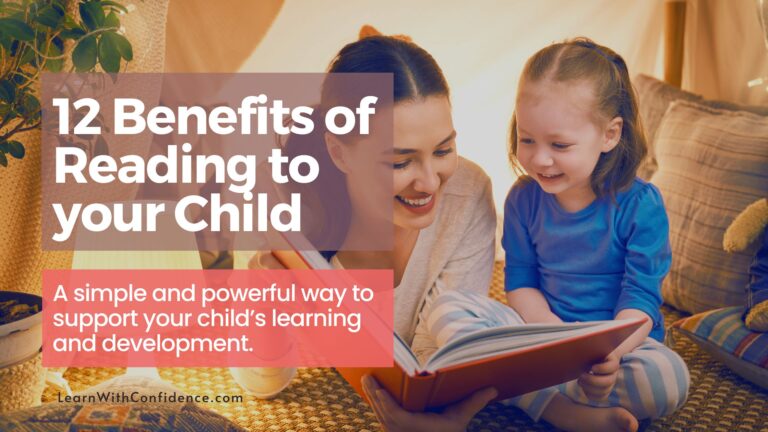
Research has consistently shown that reading aloud to your child is one of the most valuable experiences you can share. In fact, the amount of time parents spend reading with their children has been linked to stronger language development, better reading comprehension, richer vocabulary, and even a greater motivation to read later in life.
And while those academic benefits are incredible, I believe the greatest gift of reading together goes far beyond literacy.
Reading Together Builds More Than Reading Skills
When we read to our children, we’re doing so much more than teaching them about letters and words.
We’re introducing new vocabulary, exposing them to rich and varied language. We are helping them understand how stories work and encouraging imagination, curiosity, and critical thinking.
We’re giving them opportunities to ask questions, make predictions, and connect new ideas with their own experiences.
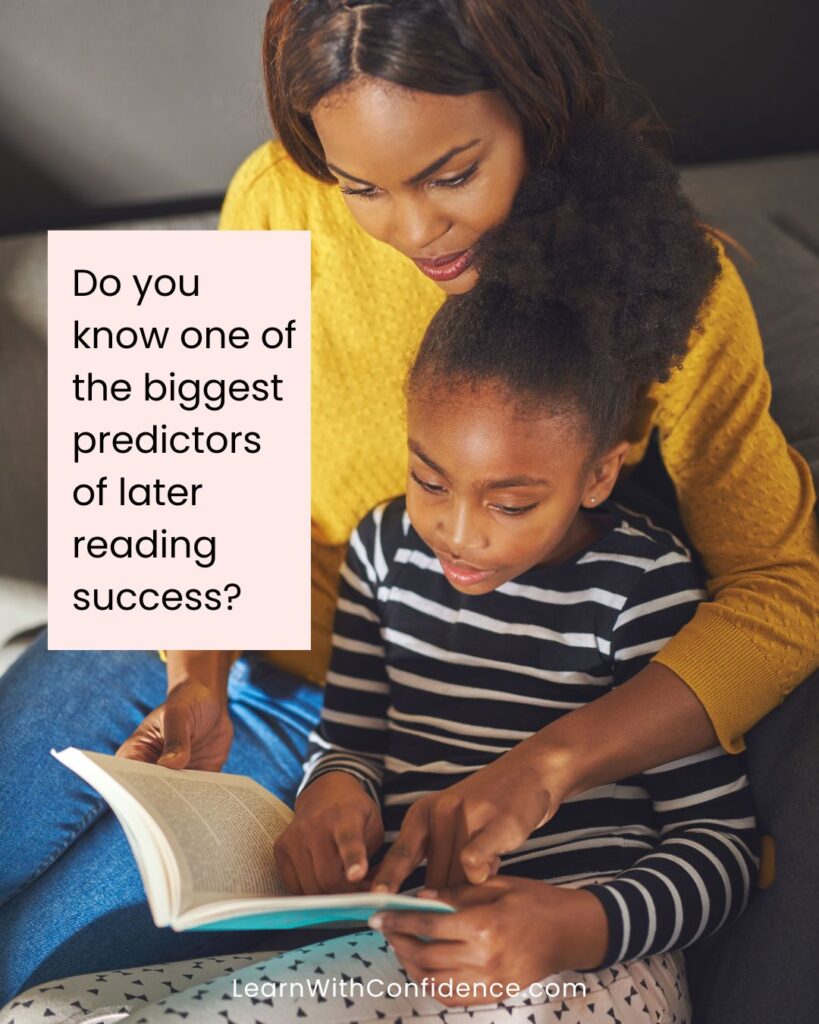
These are all important building blocks for later reading success.
In fact, research suggests that the language parents use during book reading is often richer and more complex than the language used in everyday conversations. That means every story your child hears is exposing them to new words, sentence structures and ideas that help strengthen their language development.
The Benefits Reach Beyond Reading
As a matter of fact, strong language skills don’t just help children become confident readers. They support learning across the curriculum.
Children with well-developed vocabulary and language comprehension often find it easier to understand instructions, express their ideas, solve problems and even tackle Math word problems, where understanding the language of the question is just as important as the Math itself.
Reading aloud is helping to build a strong foundation for learning in general, not just literacy.
Reading Creates a Safe Space for Learning
One of the things I love most about reading together has nothing to do with phonics or comprehension.
It’s the connection.
Think about your favorite reading moments with your child.
Maybe it’s cuddling on the couch before bedtime or giggling over a silly picture book. Maybe it’s reading the same favorite story for the hundredth time because your child insists on “just one more!”
These moments matter.
When children feel safe, connected and emotionally secure, their brains are better able to engage, explore, and learn. A regulated brain is ready to learn.
Reading together naturally creates opportunities for connection and co-regulation. Your calm presence, your voice, your shared attention, and the predictable rhythm of a story all help create an environment where children can relax and enjoy learning.
For many children, books become associated with warmth, comfort, and belonging.
What a beautiful foundation for a lifelong love of reading.
You Don’t Have to Read Perfectly
Sometimes parents worry that they aren’t reading “the right way.”
Please let go of that pressure.
You don’t need funny voices (although they’re fun!) or ask comprehension questions after every page. And you don’t need to turn every story into a lesson.
The most important thing is simply spending time together. Here are some ways to do that:
- Pause when your child wants to comment.
- Wonder together about what might happen next.
- Laugh at the funny parts.
- Talk about the pictures.
- Enjoy the experience.
Those interactions are just as valuable as the words on the page.
Simple Ways to Make Reading Together Part of Your Day
You don’t need hours of free time to make a difference.
Try incorporating reading into everyday routines:
- Read one story before bed.
- Keep a basket of books within easy reach.
- Visit your local library regularly.
- Let your child choose the book.
- Re-read favourite stories (yes—even the same one again!).
- Read while waiting at appointments or before activities.
- Let older siblings read to younger children.
- Make reading part of your family culture.
Even ten minutes a day adds up over time.
The Lasting Gift of Reading Together
Finally, if you’ve been wondering how to support your child’s learning at home, don’t underestimate the power of a simple story.
Every book you share helps build language, strengthen literacy, encourage curiosity, and deepen your relationship with your child.
Perhaps most importantly, you’re showing them that reading isn’t just another skill to master.
It’s a source of joy.
A way to connect.
A chance to explore new worlds.
A lifelong gift.
So tonight, grab a book, snuggle up together, and read one more story.
Your child may not remember every word you read.
But they’ll remember how it felt to be close to you, wrapped up in a story. And that feeling might just be the beginning of a lifelong love of reading.
Frequently Asked Questions
Why is reading aloud important for young children?
Reading aloud helps develop vocabulary, listening skills, language comprehension, early literacy skills, imagination, and a love of books. It also strengthens the parent-child relationship through shared, meaningful experiences.
At what age should I start reading to my child?
It’s never too early! Reading can begin from birth. Even babies benefit from hearing your voice, listening to language, and enjoying the closeness that comes with sharing a book.
How long should I read to my child each day?
Consistency is more important than length. Even 10–15 minutes of shared reading each day can have lasting benefits for language development and literacy.
REFERENCES:
- Ece Demir-Lira, Ö., Applebaum, L. R., Goldin-Meadow, S., & Levine, S. C. (2019). Parents’ early book reading to children: Relation to children’s later language and literacy outcomes controlling for other parent language input. Developmental science, 22(3), e12764. https://doi.org/10.1111/desc.12764
- Moonsamy, S. & Carolus, S. (2019). Emergent Literacy and Language support for ECD children from under-served communities in Gauteng South Africa: a collaborative approach. Per Linguam. 35 (2). http://dx.doi.org/10.5785/35-2-898
- Crosh, C. C., Koripella, A., Elleman, C., Foley, B., Tumin, D., & Anyigbo, C. (2024). Early Literacy Developmental Activities and Pre-Kindergarten Learning Skills in the Context of Childhood Adversity. Academic pediatrics, 24(6), 905–913. https://doi.org/10.1016/j.acap.2024.01.005