How to Build Your Child’s Cognitive Skills Through Everyday Play
Have you ever watched your child carefully stack blocks, sort buttons into little piles, or ask you to read the same book over and over again? Moments like these might seem like simple play, but they’re doing something remarkable.
Every time your child explores, experiments, remembers, and solves little problems, they’re building important cognitive skills. These are the mental processes that help children think, learn, remember information, pay attention and make sense of the world around them.
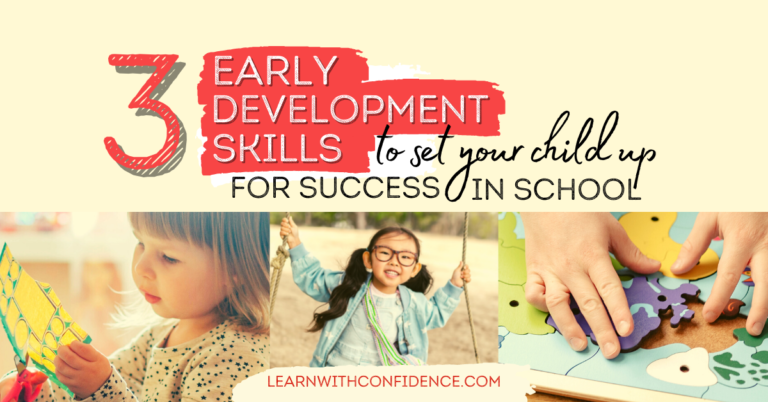
The wonderful thing is that cognitive development doesn’t require expensive educational toys or hours of structured lessons. Some of the most powerful learning happens during ordinary moments, reading together on the couch, helping in the kitchen or playing on the living room floor.
Let’s look at some of the key cognitive skills your child is developing during the early years and simple ways you can nurture them through everyday play.
What Are Cognitive Skills?
Cognitive skills are the mental abilities that allow us to process information, solve problems, make decisions, and learn new things. They develop rapidly throughout early childhood and provide the foundation for later learning, both in school and in everyday life.
When children strengthen these skills during the preschool years, they’re building the foundations they’ll rely on for reading, mathematics, writing, following instructions, and independent thinking.
Today we’ll explore four important areas:
- Working memory
- Recognition of colours, shapes, numbers, and letters
- Early reading skills
- Early maths skills
Working Memory: Holding Information in Mind
Working memory is the ability to hold information in your mind while using it. For young children, this might mean remembering two simple instructions, recalling where they left a toy or following the steps of a familiar routine.
This skill plays an important role in almost every area of learning. Children use working memory when they listen to instructions, answer questions, solve problems and eventually learn to read and complete mathematical calculations.
Because working memory is still developing during the preschool years, children benefit from plenty of opportunities to practice it through play.
Simple ways to strengthen working memory
Give short multi-step instructions
Instead of giving one instruction at a time, try saying:
“Please put your shoes by the door, grab your water bottle, and come back to me.”
Start with two steps and gradually increase the challenge as your child becomes more confident.
Play memory games
Place five or six everyday objects on a tray. Give your child a minute to look carefully before covering the objects. See how many they can remember.
Play matching games
Memory card games encourage children to remember where pictures are hidden while keeping track of previous turns.
Copy rhythms
Clap a simple pattern for your child to copy. As they improve, make the patterns a little longer or introduce different movements.
Create simple scavenger hunts
Ask your child to find:
- something red
- something soft
- something that rolls
Remembering the list while searching gives working memory a gentle workout.
Recognising Colours, Shapes, Numbers, and Letters
Long before children begin reading or solving maths problems, they first need to recognise and understand the symbols they’ll eventually use.
Recognizing colors, shapes, numbers and letters gives children the building blocks for later learning. As they become familiar with these concepts, they begin noticing patterns, making comparisons and connecting new information with what they already know.
The key isn’t drilling flashcards. It’s giving children repeated opportunities to notice these concepts naturally throughout their day.
Everyday ideas to try
- Go on color hunts around the house or garden.
- Sort buttons, blocks, or toys by colour, shape, or size.
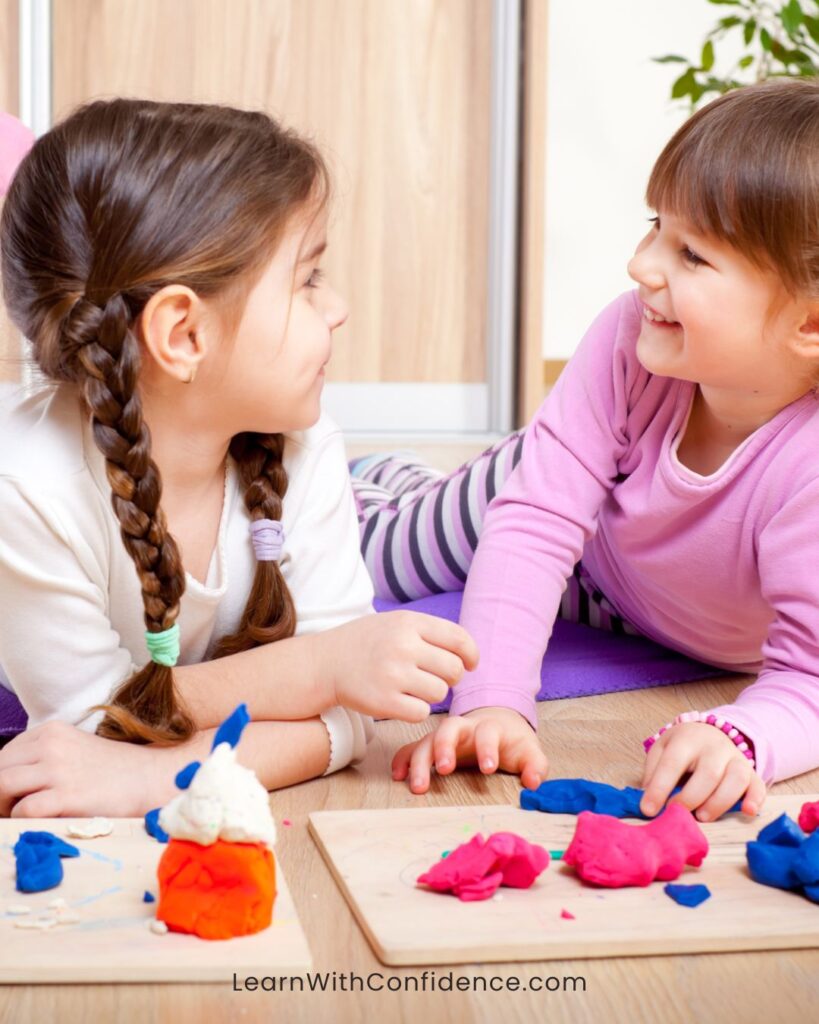
- Use playdough to create letters, numbers, and shapes.
- Practice drawing letters and numbers in sand, salt or shaving foam.
- Point out shapes, numbers, and letters on signs, packaging, books and during everyday outings.
Children often need many playful exposures before these concepts become familiar, so don’t worry if progress seems slow. Consistency matters far more than speed.
Early Reading Skills Begin Long Before Reading
Learning to read starts long before a child recognizes their first word.
Strong readers first develop a range of pre-reading skills that prepare their brains for formal reading instruction. These early foundations help children understand how books work, notice the sounds in language, and make meaning from what they hear.
Some of the most important early reading skills include:
- Print awareness – understanding that print carries meaning and is read from left to right.
- Phonological awareness – noticing sounds in spoken language, including rhyming words, syllables, and beginning sounds.
- Visual discrimination – recognising small differences between letters and symbols.
- Sequencing – remembering and retelling events in the correct order.
Ways to encourage early literacy
Read aloud every day
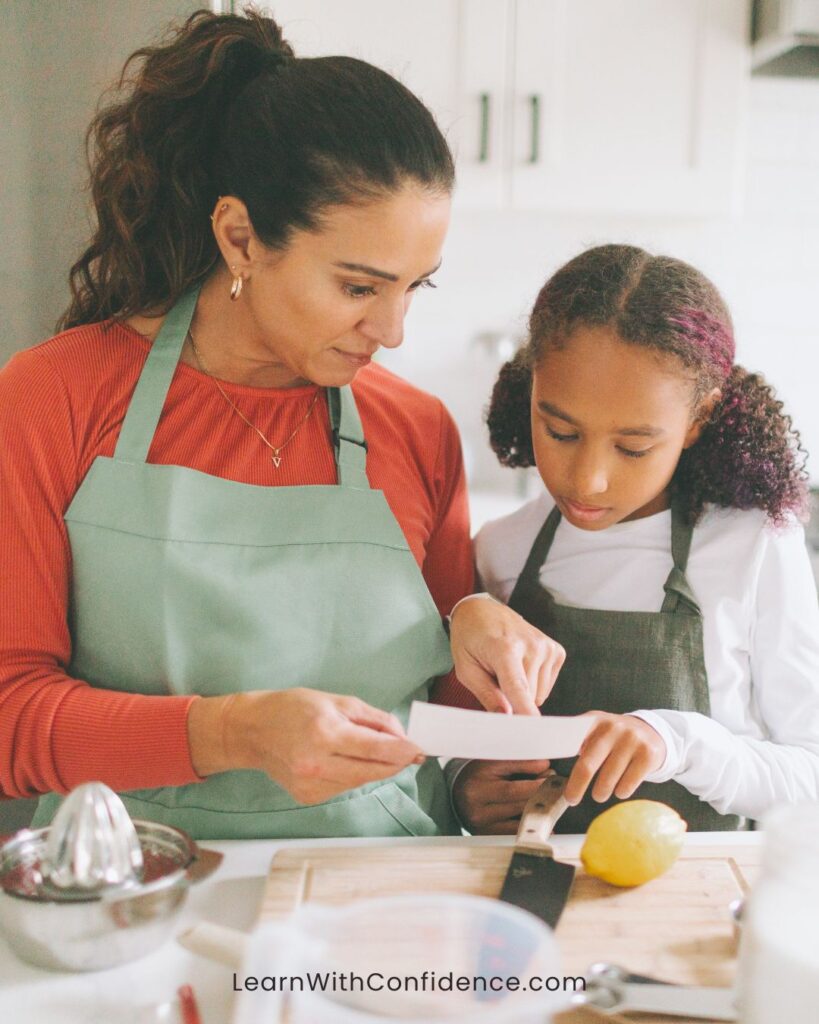
Reading together remains one of the most valuable things you can do. Pause occasionally to ask questions like:
“What do you think will happen next?”
or
“Why do you think the character felt that way?”
These conversations build comprehension alongside language skills.
Sing songs and nursery rhymes
Rhymes naturally strengthen children’s awareness of sounds and patterns in language, which later supports reading.
Retell stories
Invite your child to tell you what happened first, next, and last after reading a book or experiencing something together.
Explore letters through play
Magnetic letters, alphabet puzzles, chalk drawings, and sensory writing activities all help children become familiar with letters in enjoyable, low-pressure ways.
Early Maths Skills Grow Through Everyday Experiences
Just like reading, maths learning begins long before worksheets or formal lessons.
Children develop mathematical thinking by exploring, comparing, sorting, measuring, building and noticing patterns in the world around them.
Some important early maths concepts include:
- Number recognition
- One-to-one correspondence
- Comparing quantities
- Sorting and classifying
- Patterns and sequencing
Simple maths activities
Count throughout the day
Count stairs, snacks, toys, birds outside the window, or pieces of fruit while preparing meals.
Use toys for simple maths
Ask questions like:
“If we have four teddy bears and one goes to sleep, how many are left?”
Sort everyday objects
Laundry, blocks, buttons, leaves, and toy animals all become wonderful maths tools when children sort them into groups.
Measure together
Compare the lengths of toy cars, sticks, or shoes using string, paperclips, or blocks.
Create repeating patterns
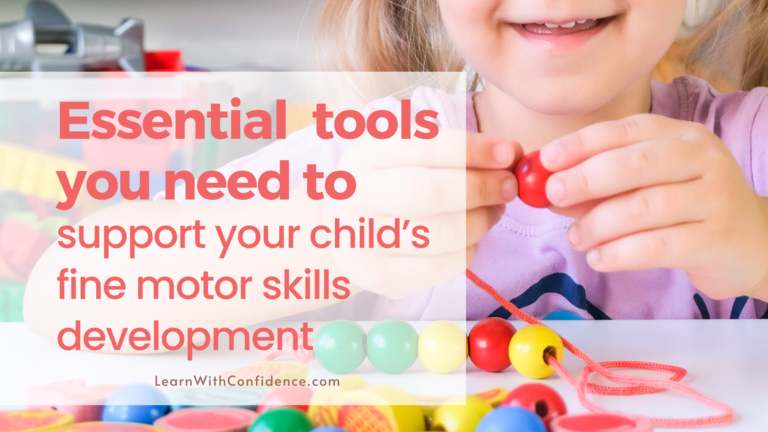
Use beads, stickers, blocks, or even fruit pieces to make simple repeating patterns together.
When maths is part of everyday life, children begin to see it as something useful and enjoyable rather than something to fear.
Learning Happens in the Little Moments
One of the biggest misconceptions about early learning is that children need formal lessons to make progress.
In reality, young children learn best through warm relationships, meaningful conversations, playful exploration and repeated everyday experiences.
Every story you read together, every puzzle you complete, every game you play, and every curious question you answer is helping build the cognitive skills your child will use for years to come.
You don’t need to fill every moment with structured activities. In fact, children often learn the most when they have time to explore, experiment and discover alongside a caring adult.
Those ordinary moments, like building towers, baking muffins, collecting leaves, singing songs in the car or searching for shapes on a walk, are doing far more than keeping little hands busy. They’re helping your child develop the thinking skills they’ll carry into reading, math, problem-solving and lifelong learning.
So the next time you sit down to play, remember that you’re not “just playing.” You’re building strong foundations for confident, capable learning, one joyful moment at a time.