Sensory Development In Toddlers: Why It Matters And How To Support It
Ever had one of those days when your toddler is having a full-blown meltdown over the texture of their socks or because the wind is “too blowy”? If yes — you are so not alone.
What if I told you that a lot of these everyday battles and big feelings aren’t just “bad behavior” or emotional immaturity? They’re actually linked to something deeper: sensory development.
Today, let’s explore what sensory integration really is, why it’s so important in the early years, and how we, as moms, can gently and practically support our children’s growth in this area — even through the chaos.
How Kids Experience the World: Through Their Senses
Before they can spell their name or tie their shoes, our children are first learning how to feel the world — literally.
Sight, sound, taste, touch, smell, movement, balance, internal body signals… These senses help children interact with their environment and understand what’s happening both around and inside them.
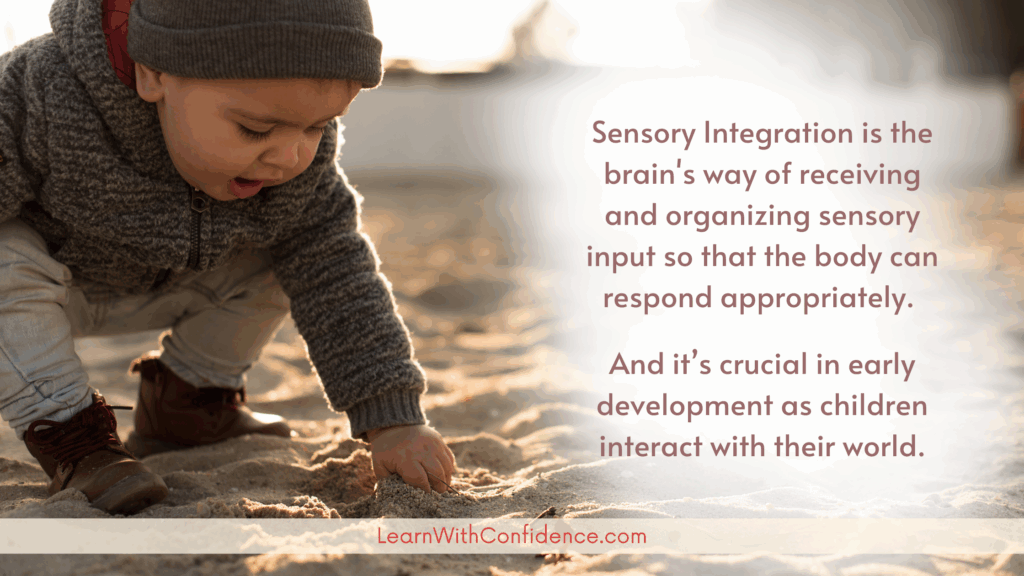
This process — known as sensory integration — is the brain’s way of receiving and organizing sensory input so that the body can respond appropriately. And it’s crucial in early development.
It helps them:
- Sit upright in a chair
- Hold a pencil correctly
- Stay focused during storytime
- Recognize when they’re hungry, overwhelmed, or tired
- Process and regulate their emotions
When sensory processing is working well, it’s invisible. But when it’s not? Cue the meltdowns, refusal to wear certain clothes, fear of swings, or aversion to loud environments. Sound familiar?
Sensory Integration Is Key to Emotional Regulation
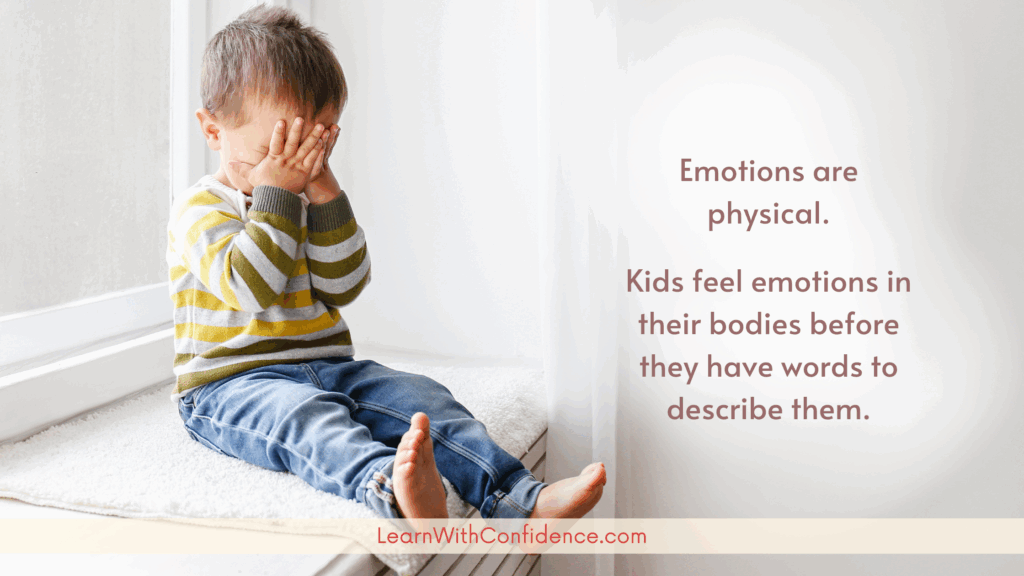
Here’s something we often forget: emotions are physical.
Kids feel emotions in their bodies before they have words to describe them. Think about it — when you’re nervous, your stomach churns. When you’re scared, your heart races.
Now imagine being two years old and having NO idea what any of that means. That’s why sensory development plays a massive role in emotional regulation.
When children can process internal signals (hunger, thirst, discomfort) and external input (noise, textures, movement), they are better equipped to stay calm, communicate, and manage big feelings.
When they can’t? Well, they fall apart — not because they’re “naughty,” but because their brain hasn’t made all the right connections yet. That’s where we come in.
How to Support Your Child’s Sensory Development
Let’s break this down into three types of sensory experiences you can support at home — without needing a fancy setup or sensory gym.
Senses That Take In the World (External)
This includes sight, sound, taste, touch, smell — the ones we all learned in school.
Think of how we introduce solids: we offer different flavors and textures, even if some are met with faces of disgust. Why? Because variety builds tolerance. The same applies to all senses.
💡 Try this:
- Introduce new foods regularly (yes, even if they spit it out).
- Explore different textures: dry pasta, water play, soft blankets, rough bark.
- Offer sound variety: nature sounds, instruments, quiet, and loud.
- Take walks and talk about what they see, hear, and smell.
As they react, notice and name their reactions:
“That ice cream is really cold, isn’t it?”
“Wow, that bird was so loud!”
“Do you like the feeling of the grass on your toes?”
This helps connect physical sensations with words — a powerful first step in building awareness and regulation.
Senses That Help Them Move and Coordinate (Body-World Connection)
These are often less known but super important:
- Vestibular sense (balance and movement)
- Proprioception (awareness of body position)
- Visual-spatial perception (how they move through space)
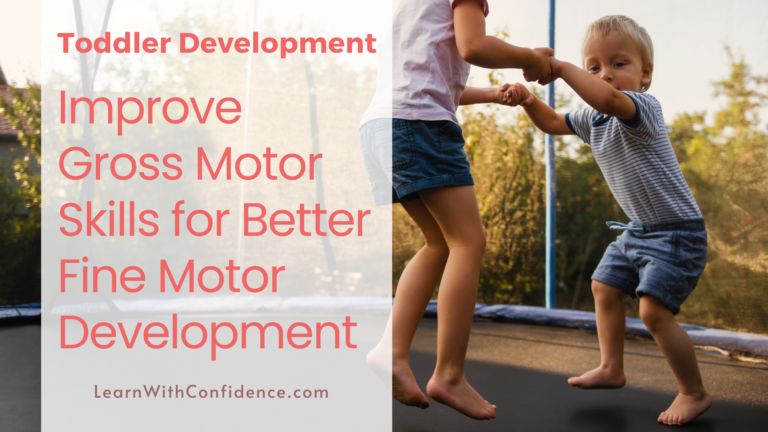
These senses are activated when they swing, spin, roll, climb, jump, run, and slide. These are not just fun — they’re developmental necessities.
💡 Try this:
- Let them swing, spin, climb, hang upside down.
- Play “animal walks” (crawl like a bear, hop like a frog).
- Use weighted items like beanbags or backpacks with a soft toy.
- Encourage walking on uneven surfaces (like grass, sand, or rocks).
All of these support motor control, balance, spatial awareness, and even help with focus and calmness.
Senses That Help Them Move and Coordinate (Body-World Connection)
This is known as interoception — the awareness of internal body signals like hunger, thirst, temperature, needing the bathroom, etc.
For young kids, this is still developing. That means they often feel something uncomfortable in their bodies and can’t name it — which leads to… you guessed it: big meltdowns.
💡 Try this:
- Help them notice body cues: “Is your tummy rumbling? That might mean you’re hungry.”
- Talk through internal feelings: “It’s hot today — do you feel sweaty?”
- Offer water and snack breaks proactively.
- Help them check in: “How does your body feel after jumping?”
This isn’t about forcing them to self-regulate right away. It’s about building awareness slowly — so that over time, they can say, “I’m tired” or “I’m overwhelmed” instead of screaming in frustration.
{Image 👇}
Help Them Find the Words
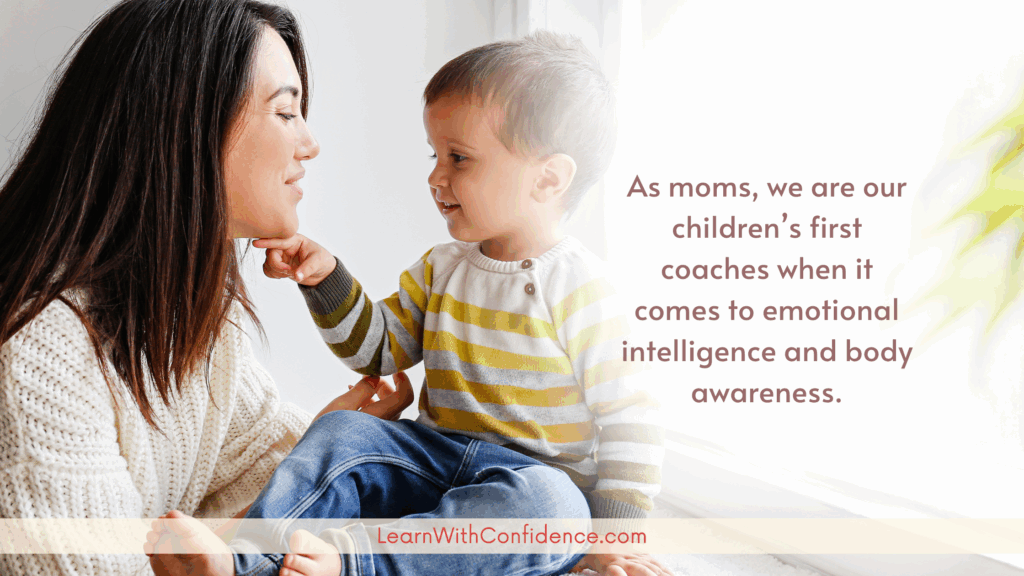
As moms, we are our children’s first coaches when it comes to emotional intelligence and body awareness.
It starts with simple, everyday commentary:
- “Careful, your supper is still warm.”
- “That water is freezing, isn’t it?”
- “Feel the puppy’s fur — it’s so soft!”
Then we move into asking questions:
“How did that feel in your body?”
“What do you think about that bumpy slide?”
“Was the noise too loud or just exciting?”
And eventually, we help them connect physical sensations to emotions:
“You’re feeling yucky — do you think your tummy might be hungry?”
“It was really noisy at the party — did that make you feel overwhelmed?”
“Your clothes feel tight today — maybe that’s making you grumpy?”
The more they learn to name and understand their feelings, the more control they gain. Naming something gives us power over it.
The Power of Coregulation
When the meltdowns hit — and they will — your calm presence is the anchor your child needs.
Start by coregulating:
- Lower your voice.
- Get down to their level.
- Offer a hug or just stay nearby.
Once they’re calm, connect the dots:
“I think you were hungry and didn’t know it.”
“It was too loud in there. That’s okay — sometimes I don’t like that either.”
“You felt scared and it came out as yelling. Let’s talk about what we can do next time.”
You’re not just solving the problem. You’re giving them the tools to understand and manage those big, confusing feelings
Final Thoughts: Sensory Development Is the Hidden Hero
We often focus on letters, numbers, and milestones — but behind all that is a child’s ability to process the world through their senses.
When we support sensory integration, we’re helping our kids:
- Stay calm under pressure
- Communicate their needs
- Explore the world confidently
- Learn and focus more easily
- Build self-awareness and emotional intelligence
It doesn’t take fancy toys or expensive programs — just intentionality, observation, and a whole lot of grace.
So the next time your toddler has a “moment,” pause and ask:
Could it be something sensory?
Chances are, it might be.
You’ve got this, mama — one sensory adventure at a time.
💡 Want More?
Check out these resources to help your toddler / preschooler thrive!
Connect with me
Feel free to reach out in the comments or send me an email to connect. It’s my mission to equip and empower you to help your child succeed – you are, after all, the best person for that job, because you are the expert on your child.